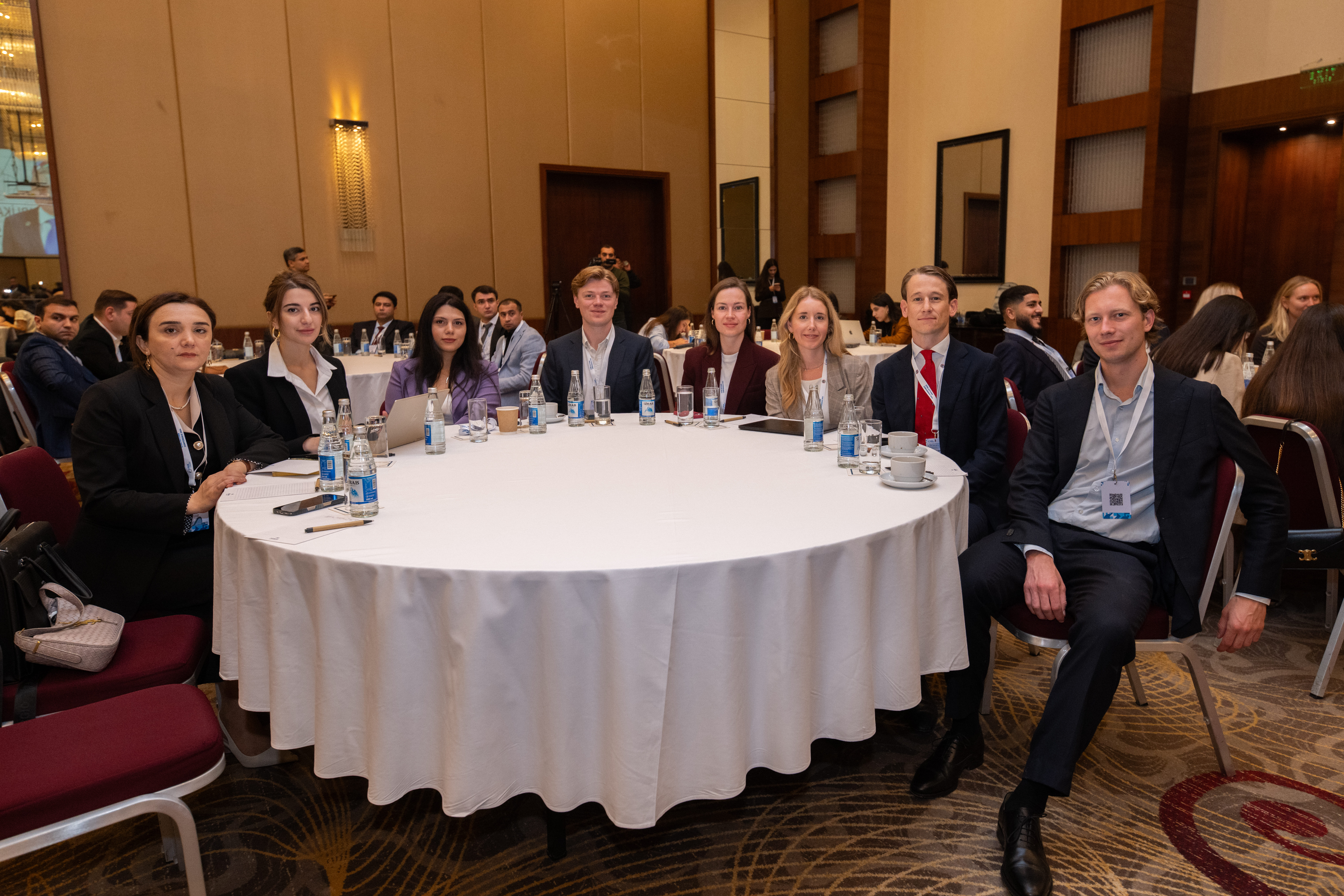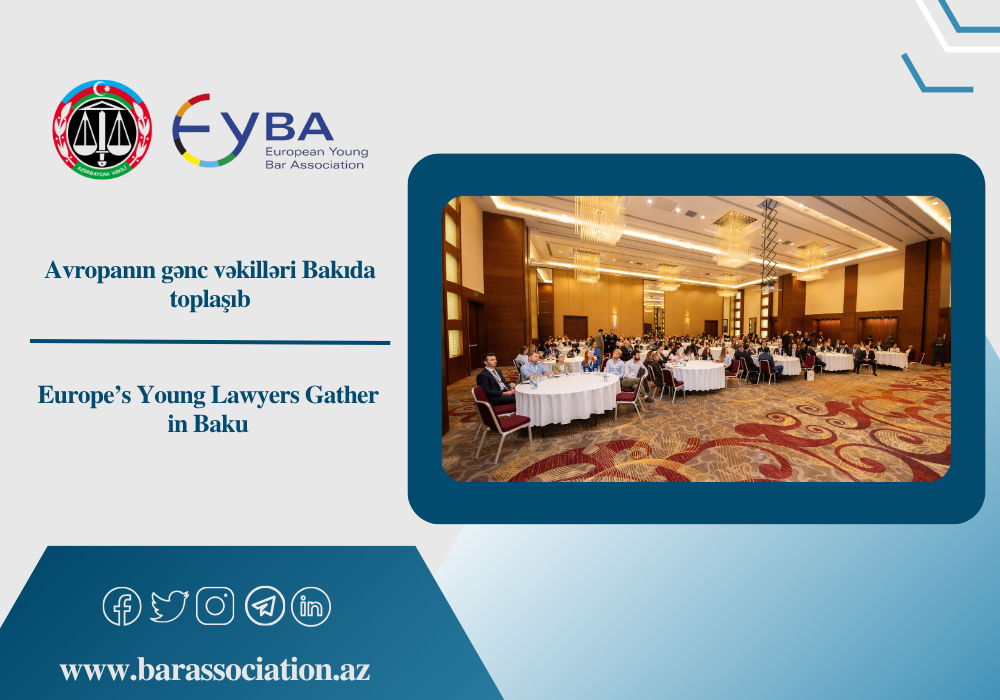
From 8 to 11 October 2026, the Bar Association of the Republic of Azerbaijan (ABA) and the European Young Bar Association (EYBA) jointly organized the EYBA Autumn Conference 2026, under the theme “AI, Data and Digital Rights: The Same Trend, Different Approaches Shaping the Digital Legal Future.”
The opening ceremony of the international
conference, held on 9 October at the Hilton Hotel in Baku, brought together the
leadership of the ABA and EYBA, as well as more than 200 young lawyers and
legal professionals, including nearly 100 international guests from various
countries around the world.
The conference focused on the latest developments in
artificial intelligence, data protection, and digital rights, as well as
emerging approaches and challenges in these fields. Participants also exchanged
views and experiences on the development of the legal profession, contemporary
trends in law, and the future of legal practice.
The event commenced with the performance of the
National Anthem of the Republic of Azerbaijan.
Delivering the opening address, EYBA Vice-President
Federico Comuratti welcomed the participants and expressed his gratitude to the
ABA and the Organizing Committee for hosting the conference in Baku.
He highlighted EYBA's contribution to the
professional development of young lawyers, the expansion of international
cooperation, and the promotion of human rights and the rule of law.
Speaking about the opportunities that artificial
intelligence presents for the legal profession, the Vice-President emphasized
that this technology facilitates legal research and data analysis. At the same
time, Federico Comuratti stressed that lawyers should not blindly rely on
AI-generated results but must preserve their independent thinking and
professional judgment.
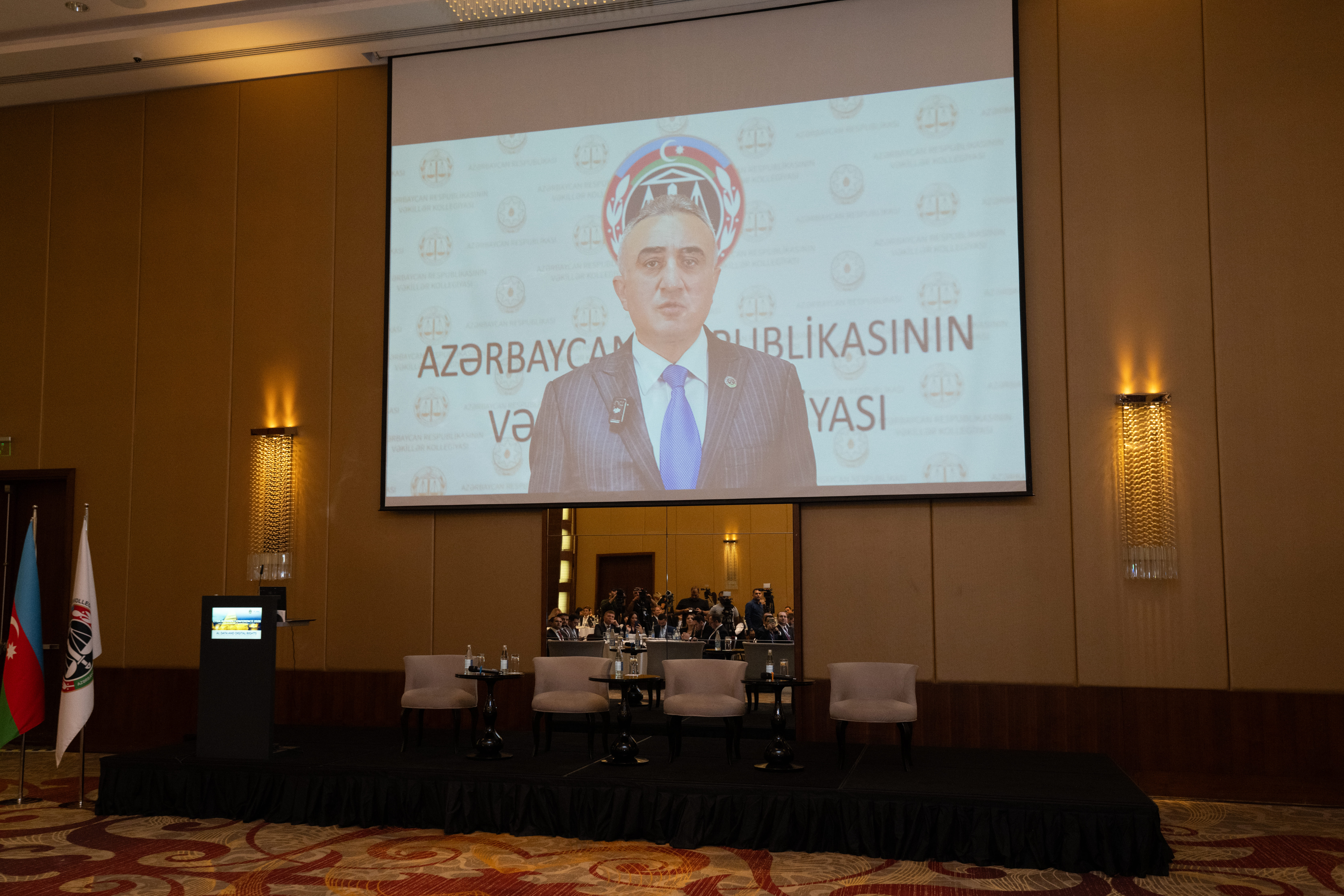
A video address by ABA Chairman Anar Bagirov was
also presented during the conference. In his remarks, the Chairman expressed
his pleasure at hosting the EYBA Autumn Conference in Baku, warmly welcomed the
participants, and wished them an enjoyable stay in Azerbaijan. He also spoke
about the country's rich legal history, multicultural values, and longstanding
traditions of hospitality.
Anar Bagirov noted that Azerbaijan's legal system
continues to develop in accordance with modern principles and international
standards, with artificial intelligence, data protection, and digital rights
emerging as increasingly important areas.
Emphasizing the growing influence of artificial
intelligence across various aspects of life, the Chairman highlighted the
importance of discussing its opportunities and challenges from a legal
perspective. He noted that the Autumn Conference serves as an important
platform for exchanging experiences and strengthening professional ties among
young lawyers from different countries.
The Chairman also pointed out that interest in the
legal profession among young people in Azerbaijan continues to grow, with the
vast majority of newly admitted ABA members being young professionals. Anar
Bagirov highlighted the role of the Young Lawyers Committee, operating under
the ABA, in supporting the professional development and active participation of
young lawyers. He further emphasized the ABA's strong commitment to
international cooperation and strengthening relations among lawyers from
different countries.
Expressing his confidence that the discussions and
exchanges during the conference would inspire new ideas and future
partnerships, the Chairman noted that the legal profession is not merely about
laws and institutions, but also about people, mutual understanding, and
professional relationships.
Addressing the participants, Anar Bagirov encouraged
them to actively engage in the conference discussions, share their experiences,
and take advantage of the opportunity to build meaningful connections with
colleagues from different countries.
The conference featured three panel discussions
covering key areas of artificial intelligence and digital law.
The first panel, entitled “Artificial Intelligence
in Legal Practice and the Judiciary,” was moderated by Sona Salimli-Alasgarova,
a member of the ABA. The panel featured ABA members Shabnam Taghiyeva and Ilham
Huseynov, as well as Orkhan Abdulkarimli, a representative of the National
Cybersecurity Center. The discussion focused on the growing role of artificial
intelligence in legal practice and judicial proceedings, examining its impact
on lawyers, courts, decision-making processes, and the future delivery of legal
services.
The second panel, entitled “Artificial Intelligence
and Fundamental Rights,” was moderated by ABA member Yunis Nasibov. The panel
brought together Elvin Balajanov, Director of Cyber Point LLC, and ABA members
Kamil Damirli and Mubariz Aliyev. The speakers discussed the impact of
artificial intelligence on fundamental rights, including privacy, equality,
human dignity, freedom of expression, and access to justice. They also examined
the legal safeguards necessary to protect these rights in an environment where
artificial intelligence is becoming increasingly widespread.
The conference also featured an interactive workshop
led by Javid Abbasov, Head of the Business Analysis Department at Prodata. The
session explored one of the less frequently discussed aspects of AI regulation:
how the use of artificial intelligence and automated decision-making systems by
public authorities should be regulated.
Drawing on practical experience in data integration
between government institutions and the provision of digital public services,
the workshop also addressed the legal foundations of AI-assisted government
decision-making, transparency, accountability, and the protection of citizens'
rights.
The conference concluded with the final panel
discussion, entitled “AI Governance and Data Protection,” moderated by Javid
Mammadli, Head of the International Cooperation Department of the ABA. The
panel featured Tabriz Jafarov, Associate Professor at the School of Law of ADA
University, and Najiba Mustafayeva, Associate Professor at the Faculty of Law
of Bahçeşehir University.
The discussion addressed regulatory approaches to
artificial intelligence, responsible AI governance, cybersecurity, and data
protection. Particular attention was given to accountability, transparency,
risk management, and emerging legal frameworks.
A variety of cultural activities were also organized
for participants as part of the conference.